
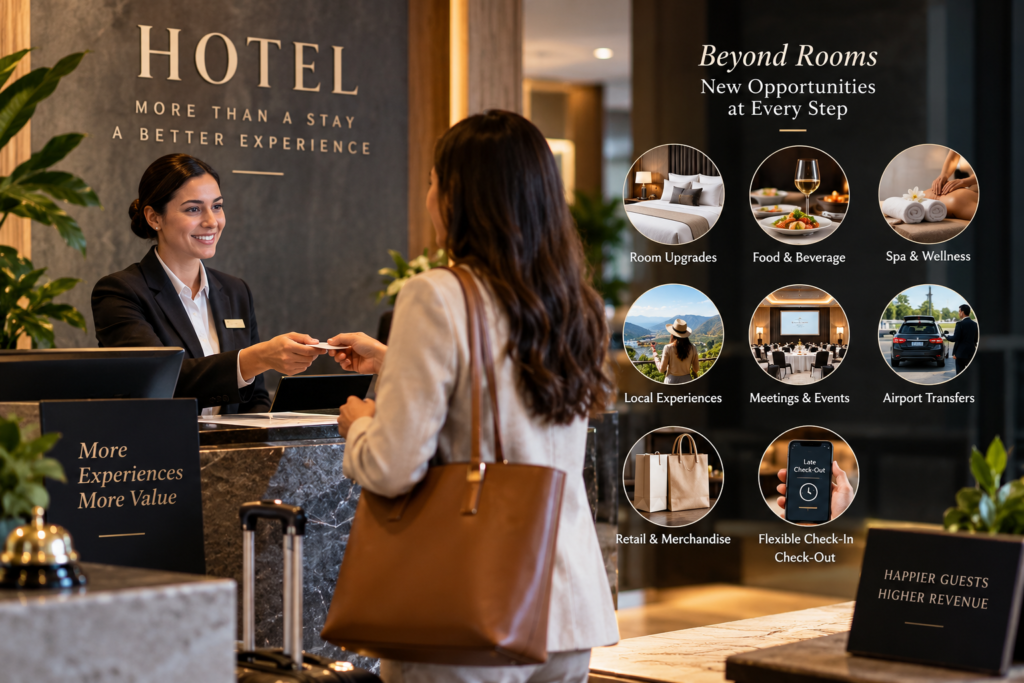
Room rates only tell half the story anymore. Walk into any revenue management meeting in 2026 and you’ll hear the same thing: hotel ancillary revenue isn’t a nice-to-have side hustle, it’s become one of the biggest levers hotels have to actually move the profitability needle. Room nights are still the foundation, sure, but the real growth story is happening everywhere else in the guest journey, before check-in, during the stay, and even after checkout.
The interesting part is how much this has shifted. A decade ago, ancillary revenue basically meant minibar charges and the occasional spa upsell. Now it’s a whole strategy built around hotel guest experience, smarter hotels, vacation rentals and short term rentals upselling, and a genuine effort to increase hotel revenue without just raising rates and hoping nobody notices. Here are seven ways hotels are actually doing this in 2026.
1. Pre-Arrival Upselling That Doesn’t Feel Like a Sales Pitch
The booking confirmation email used to be the end of the conversation. Now it’s the start of one. Hotels are using pre-arrival messaging, sent through email, SMS, or app, to offer room upgrades, early check-in, airport transfers, and dinner reservations before the guest even packs their bag.
What’s changed is the tone. Instead of generic “upgrade your stay” blasts, the better operators are personalizing offers based on booking type, trip purpose, and even past stay history. A couple booking a weekend getaway sees a different offer than a business traveler flying in for one night. This targeted hotels, vacation rentals and short term rentals upselling converts far better than a one-size-fits-all pitch, and guests genuinely appreciate not being spammed with irrelevant offers.
2. In-Stay Mobile Ordering as a Revenue Channel, Not Just a Convenience
Mobile ordering started as a pandemic-era convenience feature. In 2026, it’s a legitimate revenue channel. Guests order room service, poolside drinks, or spa treatments straight from an app or a QR code, often with dynamic menus that highlight higher-margin items at the right moment, say, suggesting a bottle of wine right when someone’s ordering dinner for two.
This matters because friction kills impulse spending. A guest who has to call the front desk and wait on hold often just doesn’t bother. Remove that friction, and spending per guest quietly climbs, without anyone feeling like they’ve been upsold.
3. Experience Packages Built Around Local Partnerships
Hotels are getting smarter about packaging experiences rather than just selling rooms and hoping guests figure out what to do with their trip. Partnering with local tour operators, restaurants, wineries, and activity providers, hotels, vacation rentals and short term rentals bundle curated experiences and take a cut, or mark them up slightly, as part of the booking.
This isn’t new in concept, but the execution has gotten sharper. Instead of a dusty concierge desk brochure, these packages are now presented digitally, often at the point of booking or check-in, tailored to the guest’s interests. It’s a meaningful piece of hotel ancillary revenue, and it also does double duty by making the destination feel more accessible, which feeds directly into guest satisfaction.
4. Wellness and Recovery-Focused Add-Ons
Wellness spending hasn’t slowed down, and hotels, vacation rentals and short term rentals have noticed. Beyond the traditional spa menu, properties are adding recovery-focused amenities: infrared saunas, cold plunge sessions, in-room fitness equipment rentals, sleep-optimization packages with blackout upgrades and white noise machines.
These add-ons work particularly well because they align with what a growing number of travelers actually want out of a trip. It’s not just extra revenue for the sake of it, it genuinely enhances the hotel guest experience, which makes it an easier sell than something that feels purely transactional.
5. Subscription-Style Perks for Repeat Guests
A newer trend gaining traction is subscription or membership-style offerings, guests pay a flat fee for a bundle of perks like free parking, room upgrades when available, late checkout, or discounted F&B, across multiple stays. This works especially well for hotels, vacation rentals and short term rentals with a strong base of repeat business travelers or regional leisure guests.
It’s a clever way to lock in loyalty while generating predictable ancillary income, rather than relying purely on one-off upsells that vary wildly from guest to guest.
6. Smarter Use of Unused Inventory
Empty meeting rooms, underused pool decks, quiet co-working lounges, these spaces used to just sit there between events. Now hotels, vacation rentals and short term rentals are renting them out by the hour to remote workers, small local businesses, or even for social media content shoots. It’s a low-effort way to squeeze revenue out of space that would otherwise generate nothing.
Some properties have gone further, turning rooftop spaces into ticketed sunset events or partnering with local brands for pop-up activations. None of this requires new construction or major investment, just a willingness to see existing space differently.
7. Data-Driven Personalization at Checkout
The final touchpoint of a stay is getting more attention too. Instead of a flat folio and a “thanks for staying,” hotels, vacation rentals and short term rentals are using guest data to surface relevant offers right at checkout a discounted future stay, a retail item the guest asked about during their visit, or an invitation to join a loyalty tier with added perks.
This closing moment is often underused, but it’s a natural point to reinforce the relationship and plant the seed for the next booking, which ties ancillary revenue directly back to long-term guest retention.
The Bigger Picture
None of these seven approaches work in isolation, and none of them work well if they feel forced. The hotels, vacation rentals and short term rentals seeing the strongest results in 2026 are the ones treating hotel ancillary revenue as an extension of hospitality, not a bolt-on sales tactic. Done right, thoughtful hotel upselling and well-timed offers don’t annoy guests; they actually improve the hotel guest experience by making a stay feel more tailored and effortless.
For hotels looking to increase hotel revenue without simply pushing rates higher, the guest journey itself is the opportunity. Every touchpoint, from the confirmation email to the checkout folio, is a chance to add value and capture revenue at the same time. The properties that figure this out first won’t just see healthier margins, they’ll build guests who come back.