
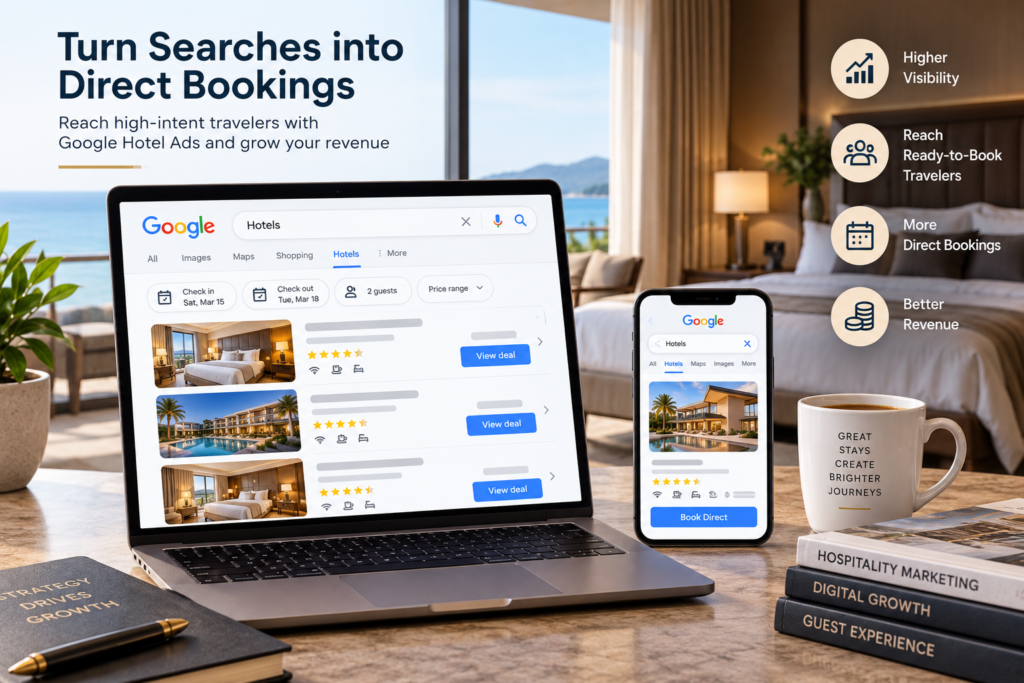
Here’s something most hoteliers already know deep down but don’t always act on: guests are shopping around before they book. A lot. Someone might check your website, then hop over to Booking.com, glance at TripAdvisor, and maybe even Google your hotel’s name just to see what pops up. By the time they actually hit “reserve,” they’ve probably compared your rate in four or five places. That behavior is exactly why hotels, vacation rentals and short-term rentals metasearch has become such a big deal over the past few years. And if there’s one player in this space that hotels genuinely can’t afford to ignore, it’s Google Hotel Ads.
If you’re running an independent property or a small group of hotels, you’re already up against OTA giants with massive ad budgets. Metasearch is one of the few places where you can actually compete on a level field, and use it to win back hotel direct bookings that would otherwise go straight to a third party.
Okay, But What Actually Is Hotel Metasearch?
Think of hotel metasearch like a flight comparison site, except for hotels. It pulls rates from a bunch of different sources, your own website, OTAs, and sometimes even wholesalers, and lays them all out side by side so travelers can compare at a glance.
Google Hotel Ads, Trivago, Kayak, and TripAdvisor are all metasearch platforms. The key thing to understand is that they don’t actually complete the booking themselves. They just point the traveler in the right direction. Click on your rate, and you will be sent to your website. Click on Expedia’s rate, and off you go there instead. That one detail is what makes metasearch so valuable. It’s a rare moment when your hotel’s own booking engine gets to stand right next to the big OTAs and make its case.
Why Google Hotel Ads Deserves Special Attention
Out of all the metasearch options out there, Google Hotel Ads carries a different weight, mostly because of where it shows up. Someone searches “hotels near Jaipur” or types your hotel’s name directly into Google, and boom, there’s a rate comparison panel sitting right in the search results (or on Google Maps).A few reasons this matters so much:
Google is where most travel searches start in the first place, so the sheer volume of eyeballs is hard to match. And the people seeing these results aren’t just browsing idly. Someone Googling a specific hotels, vacation rentals and short term rentals by name is usually pretty far along in deciding where to stay. There’s also something psychologically powerful about seeing your own website’s rate sitting next to Booking.com’s rate, in the same panel, at the same time. If your price is equal or better, a lot of travelers will just click through to you. Why wouldn’t they? Same room, same hotels, vacation rentals and short term rentals, one less middleman.
You can show up on Google Hotel Ads for free through basic booking links, or pay for more prominent placement. Either way, it’s some of the highest-intent traffic you’ll find anywhere in digital advertising.
So How Does This Actually Turn Into More Direct Bookings?
This is where hotel metasearch marketing earns its keep. It’s not magic; it’s really just about intercepting the guest at the right moment, before habit pulls them toward an OTA.
It levels the playing field. OTAs have spent years and huge budgets building visibility. Metasearch puts your rate in the same spotlight; no massive ad budget required on your end, just a solid setup.
It saves you real money. OTA commissions usually eat up 15-25% of every booking. Every guest you pull toward hotel direct bookings instead is money staying in your pocket. Multiply that across a year of bookings, and it adds up fast, especially for smaller properties running on tight margins.
It gives you the guest relationship, not just the guest. When someone books directly, you get their email, their preferences, and a way to talk to them again. Book through an OTA, and that relationship largely belongs to the OTA, not you.
It keeps rates accurate in real time. Good metasearch integrations sync straight with your PMS or channel manager, so travelers always see current pricing. Nothing kills a booking faster than a guest landing on a rate that’s no longer valid.
What It Actually Takes to Get This Right
None of this works if the basics aren’t in place. A few things worth getting right:
Keep your rates honest. If OTAs are consistently cheaper than your own site, there’s simply no reason for anyone to book direct, no matter how good your metasearch presence looks.
Your Google Business Profile matters more than people think. Since Google Hotel Ads leans heavily on Google’s own ecosystem, an updated profile with good photos, accurate info, and real reviews genuinely helps.
Make sure your booking engine doesn’t fight the guest. Slow load times or a clunky mobile checkout will torch your conversion rate no matter how much traffic you’re pulling in.
If you’re bidding on paid placements, pay attention to booking windows, device types, and seasonal shifts. Small adjustments here can meaningfully change your return.
And don’t ignore attribution. Metasearch often plays a supporting role across a longer guest journey, so understanding the full path helps you spend smarter.
Where This Is All Heading
Travel search isn’t going back to the old days of guests typing a hotel, vacation rental and short term rental name straight into a browser and booking blind. Comparison shopping is the norm now, and hotel metasearch sits right at the center of it. Google keeps investing more into this space too: tighter Maps integration, better review displays, and smarter automated bidding. Hotels that lean into this instead of treating it as an afterthought are the ones that’ll keep winning back bookings that used to slip away to OTAs. If margins matter to you, and they should, hotel metasearch marketing deserves a permanent seat at the table. Make Google Hotel Ads part of your everyday distribution strategy, and start turning comparison shoppers into direct bookers.